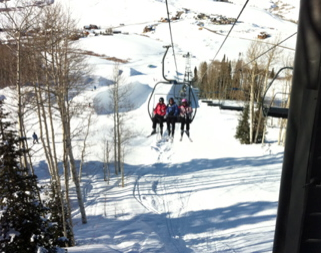
Going skiing for winter break? Mountains are my favorite destination, but...please remember that the high altitude can come with medical challenges. Be aware of signs and symptoms of "mountain sickness" (aka. altitude sickness) and if you are susceptible to this issue, look closely at ski resort altitudes- there is a wide variation.
HOW HIGH do you have to be for altitude sickness?
There is not a set elevation for typical mountain vacations that affects everyone. Symptoms are uncommon at altitudes below 5000 feet above sea level, and fairly common above 8000 feet. If you fly to a higher elevation (such as above 8000 feet), wait a day to acclimate before you start hiking the high peaks nearby. This is very common- an estimated 75% of people visiting mountains with altitudes higher than 10,000 feet will get some degree of altitude sickness. Note that many people have a significant difference in degree of symptoms between altitudes of 9000-13,000 feet- which may explain why they "felt fine" skiing last year at a different resort.
For Colorado skiers:
The highest ski mountains are in Arapahoe Basin and Loveland (13K), with Breckenridge barely under at 12,993'. Snowmass/Aspen, Keystone & Copper Mtns peak at roughly 12,300-12,500', with Crested Butte and Winter Park closer to 12K. Vail is 11,500 while Durango and Steamboat are around 10, 500. To get below 10K, consider Buttermilk at Aspen (max 9900) or Steamboat Springs Howelsen Ski Area at only 7,136. Obviously the ski towns themselves are not at these peak mountain summit heights, and many resorts offer lodging at a variety of elevations- consider this factor when deciding about the convenience of ski in, ski out, as sometimes you are better off further down the mountain.
When does it start?
Symptoms usually within the first 24 hours, and often as early as the first few hours after arrival.
What are the common signs?
- Mild to moderate: HEADACHE, decreased appetite or nausea, insomnia, and lightheadedness
- Severe: All of the above plus vomiting and shortness of breath
- Note that in severe forms, there can be brain swelling (High Altitude Cerebral Edema) and/or fluid collecting in the lungs (High Altitude Pulmonary Edema)- these are medical emergencies.
Treatment?
Ultimately, going to a lower elevation will relieve symptoms, but rest and hydration will alleviate most mild symptoms. For persistent or worsening symptoms, head to a clinic for possible oxygen and medications. For mild insomnia, try over the counter melatonin.
PREVENTION:
- Increased hydration with water or sports drinks, and avoidance of diuretics like CAFFEINE and ALCOHOL, especially the first few days.
- SLOW ASCENT if possible (driving up to the mountains is lower risk than flying).
- If you have had altitude sickness previously, especially if it has occurred on multiple trips to the same elevation, see your doctor and consider prophylactic medications (acetazolamide or steroids).
BOTTOM LINE: Don't let the mountains literally take your breath away- plan ahead to prevent altitude sickness!