Monday, January 6, 2014

Resolutions for BETTER HEALTH in 2014


Happy New Year! Many people start each year with resolutions surrounding their health, so I'd like to  jump in and suggest that you put one EASY resolution at the very top of your list. This resolution should take up well less than an hour of your life, yet can make a tremendous difference in your health for 2014...so here it is: GET YOUR ANNUAL FLU VACCINE!

If you have already received yours, pat yourself on the back & remember to encourage your friends and family to get theirs. I will confess that certain members of my family kept putting off their shots for a variety of reasons (including one trip to two pharmacies who were temporarily out of the vaccine last month), but we are 100% vaccinated now. My major message is two-fold: one, it is NOT TOO LATE in the season to get a flu shot, and two, just glance at the CDC's map above to see how widespread the flu has become this year! Last year, influenza caused over 380,000 people to be hospitalized. This flu season, we are seeing a resurgence of the pH1N1 strain (originally known as swine flu, though the "p" is for "pandemic", not pig). This particular strain is the type of flu that was so severe in 2009, but happily, all of the current flu vaccines DO include this strain. Note that pH1N1 can produce very severe illness, especially in young and middle-aged adults.

More questions about the flu or the flu vaccine? Check out "I Got Mine" or the CDC's "Flu Basics".

BOTTOM LINE: Start 2014 off right & GET YOUR FLU VACCINE (if you haven't yet this season).

Thursday, December 26, 2013

Signs & Cure for Skier's Toe


Downhill skiing is a ton of fun, but there are several common injuries that crop up with this sport. Perhaps the most common is the infamous skier's toe. Typically discovered at the end of the day, "skier's toe" shows up as a very painful BLACK TOENAIL- usually the great toe. The medical term is a subungual hematoma, which simply means below the nail bleeding.  This can occur from a single instance of trauma like dropping something on your toe, or from small, repetitive trauma like a too-small or too-big (so your foot slams back and forth) ski boot. As the tiny amount of blood builds up under the nail, the pressure escalates and the toe throbs.

The good news is that this can be quickly remedied in a clinic if you head in within hours or a day of noticing the black nail. If you wait several days trying to tough it out, we have less success treating the nail. The doctor typically burns a tiny hole in the nail, which allows the drop or two of blood to come out. (Sorry for the yucky description, but that's what we do.) Ski resort doctors usually have a cool handheld device that does the burning, while other doctors (and D-I-Y's, though I do NOT recommend this- partly because many people faint at the sight) use an unfolded paper clip with a heated end from holding it in a flame.

The BETTER news is that again, PREVENTION is key! Make sure your ski boots fit properly- don't cram your foot into a friend's boots- and be sure your socks are not bunched up. This painful injury does NOT occur if your shoes/boots fit correctly!

BOTTOM LINE: Make sure your ski boots and socks fit properly to avoid getting skier's toe, and if you DO get it, seek treatment as soon as possible!

PS And please, don't forget your HELMET when you SKI!

Friday, December 20, 2013

Snowboarding Can Be a Pain in the Rear...


Some time ago, I thought it would be great fun to learn how to snowboard. And it was...until the third day, when I was gathering speed linking my self-proclaimed awesome S turns (instead of my falling leaf) and I had to stop suddenly for a youngster that cut across my path and BOOM- I slammed right down on my rear. When the stars faded from my vision, the throbbing in the seat of my pants had my full, undivided attention- I had fractured my tailbone. For the next several months, my days were filled with apologies to our patients for appearing rude by not sitting as I listened to their concerns...but I could only sit on an inflatable "donut" that I was too vain to bring into each exam room.

Tailbone (coccyx) injuries are some of the most common snowboard injuries, although certainly they occur in other situations. Whether it is a bruise, dislocation or fracture, these injuries are caused by self-induced trauma such as falling hard on your rear end, a direct blow (your friend smashing in to you on their skis, or perhaps a contact sport like football), childbirth, or repetitive strain (such as bicycling). A bruise may or may not be visible, and the pain is typically worse when sitting or if you press on the affected area (either topically or via a bowel movement or intercourse.) X-rays can be tricky to interpret, often requiring both sitting and standing views for best accuracy.

Treatment is largely avoidance of pressure on the area, as obviously casting is not practical! Avoid prolonged sitting, and use an inflatable cushion if possible (the donut). Avoid constipation so you don't get additional pain from a hard bowel movement (so eat high fiber and drink lots of water!) Anti-inflammatory medications such as ibuprofen can help reduce pain, and using ice packs for 10-20 minutes several times per day the first few days will also help. If your pain is not controlled by these methods, it's time to head to see a doctor. They will not have a miracle cure, but can offer further diagnostics (to be sure you don't have a displaced fracture) and possibly stronger pain medications.

BOTTOM LINE: Protect YOUR "bottom line" by using padding if you are learning to snowboard and exercise caution by wearing "gripping" shoes on icy surfaces to avoid falling, and again, remember to protect your HEAD with a HELMET!

Monday, December 16, 2013

An Altitude Adjustment


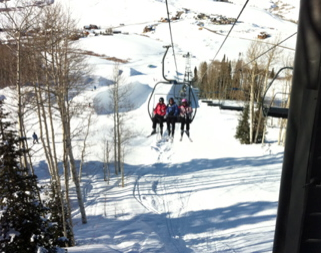
Going skiing for winter break? Mountains are my favorite destination, but...please remember that the high altitude can come with a couple medical challenges. First of all, don't be fooled that cool weather means no sunburns! Check out this blog on sunscreen so you don't end up with a high altitude burn. Secondly, be aware of signs and symptoms of "mountain sickness" (aka. altitude sickness).

HOW HIGH do you have to be for altitude sickness?
There is not a set elevation for typical mountain vacations that affects everyone. Symptoms are uncommon at altitudes below 5000 feet above sea level, and fairly common above 8000 feet. If you fly to a higher elevation (such as above 8000 feet), wait a day to acclimate before you start hiking the high peaks nearby.

When does it start?
Symptoms usually within the first 24 hours, and often as early as the first few hours after arrival.

What are the common signs?
  • Mild to moderate: HEADACHE, decreased appetite or nausea, insomnia, and lightheadedness
  • Severe:  All of the above plus vomiting and shortness of breath

Treatment?
Ultimately, going to a lower elevation will relieve symptoms, but rest and hydration will alleviate most mild symptoms. For persistent or worsening symptoms, head to a clinic for possible oxygen and medications.

PREVENTION:
  • Hydration and avoidance of diuretics like CAFFEINE and ALCOHOL, especially the first few days.
  • SLOW ASCENT if possible (driving up to the mountains is lower risk than flying).
  • If you have had altitude sickness previously, especially if it has occurred on multiple trips to the same elevation, see your doctor and consider prophylactic medications (acetazolamide or steroids).


BOTTOM LINE: Don't let the mountains literally take your breath away- plan ahead to prevent altitude sickness!

Sunday, December 1, 2013

We Should All Be #FacingAIDS


Today (and every December 1st) is World AIDS Day. Do you know anyone living with HIV disease? Or anyone who has died of AIDS? With over a million Americans living with HIV disease, odds are good that someone in your life either has or will be affected by this infection. The scary part is that only 5 out of 6 infected individuals are aware of their HIV status...which means ONE in SIX people infected with HIV are completely UNAWARE they carry and can spread the disease.


This silent presence of HIV is the very reason that back in 2006, the CDC changed screening recommendations to state that EVERYONE aged 13-64 should be tested once for HIV, regardless of perceived risk factors. People at high risk should be re-screened annually, which certainly includes sex workers  and injection drug users, but ALSO includes both gay AND heterosexual people "who themselves or whose sex partners have had more than one sex partner since their most recent HIV test." Let me say it again- even if you have had only one new partner since you were last tested, it's time to get tested again this year. 

HIV is not tucked away back in some dark corner of our society with drug addicts and prostitutes. Heterosexual transmission is the primary source (84%) of new infections in American women, causing nearly 7000 new cases in 2010. 1 in 4 new HIV infections occurs in young people (ages 13-24). If you are sexually active, it is imperative to know YOUR HIV status, and that of any potential new partners.

I love the  #FacingAIDS campaign, because putting familiar faces on unfamiliar diseases is a terrific way to promote awareness and remove stigma. By the way, the #FacingAIDS pictures do not at all imply these people have HIV disease- simply that they realize that the "face" of HIV can look like ANYONE, and this picture is to encourage everyone to get tested and be certain they know their HIV status. HIV doesn't care how much money you make, where you live or how you dress...it is an equal opportunity virus.

On this World AIDS Day, please make a commitment to know your HIV status.

BOTTOM LINE: Every American aged 13-64 should be tested for HIV disease- if you have not been checked, get tested!

Friday, November 8, 2013

Got Asthma? Get this Vaccine!


This month I am focusing on vaccinations- the FLU vaccine, Tetanus, Pertussis, and now...the "pneumonia" vaccine.  This vaccine works against Streptococcus pneumonia, the "pneumococcal bacteria" which causes hundreds of thousands of cases of pneumonia, sepsis and meningitis in the United States every year. Before routine childhood immunization against this bacteria, there were also over 5 million ear infections per year caused by this organism. This bacteria has developed quite a bit of resistance to antibiotics, and the more serious pneumococcal diseases have a very high mortality rate ranging up to 37%, so everything we can do to prevent pneumococcal disease saves innumerable lives.

Recommendations for this vaccination USED to only be for adults over 65 or those adults who had their spleen removed or had severe immune-compromising illness. However,  in 2008, the ACIP (Advisory Committee on Immunization Practices) realized that the scientific evidence showed that adults who smoke or have asthma are at much higher risk of developing pneumococcal disease, and CHANGED the RECOMMENDATIONS to include ADULTS WHO SMOKE or HAVE ANY TYPE OF ASTHMA (exercise-induced,

There are two types of pneumococcal vaccine:  PPSV23 and PCV 13, which target the specific subtypes of this bacteria that cause the most disease.  Children receive PCV13 (trade name, Prevnar), as part of their infant series at 2, 4, 6, and 12-15 months of age.


ADULTS (19 -64) should receive the PPSV23 (trade name, Pneumovax) pneumococcal vaccination if they are a SMOKER; if they have ASTHMA or  DIABETES;  or if they have chronic lung, heart, liver or kidney disease, cochlear implants, a missing (removed) or non-functional spleen, or an immuno-compromising illness such as cancer or HIV disease.

ALL ADULTS over the age of 65 should receive a PPSV23 pneumococcal vaccine as well. If they already had a pneumococcal vaccine before the age of 65 (because they are asthmatic, or a smoker, or diabetic, etc.) then they need a BOOSTER  second vaccination at 65, or as soon as it has been at least 5 years since they received their first pneumococcal shot.

Adults with some of the more serious conditions that affect their immune system should receive both types of pneumococcal vaccine (for more details, see the CDC's Pneumonia Vaccine Q&A).

BOTTOM LINE: If you are over 65 or if you are aged 19-64 and you have asthma, diabetes or have not yet quit smoking, please talk to your doctor about getting the "pneumonia vaccine"! 


Thursday, November 7, 2013

Did I Hear a WHOOP?


As a Texas Aggie, I generally love to hear a "WHOOP" (especially during football season- gig 'em, Ags!) However, as a doctor, the word or sound "whoop" triggers concerns about Pertussis, the bacteria that causes whooping cough, which has been unfortunately on the rise in our community and across the United States.

What is whooping cough?

This highly infectious respiratory disease only infects humans, and causes nearly 50 million cases of disease each year. In the United States, we only see around 40,000 documented cases/year, but certainly have many more infections that are not recognized and treated.  Smokers, asthmatics, infants, pregnant mothers and people with compromised immune systems are at the highest risk for catching pertussis, but we are also seeing outbreaks in healthy, previously immunized populations (whose immunity has worn off over the years since their last booster vaccine.)

There are several stages of whooping cough infections. The first stage is like a common cold- stuffy, runny nose, low grade temperature and a slight cough. However, the second stage is what sets this disease apart. Instead of a mild lingering cough, the cough becomes more frequent and can be intensely severe- causing fits and spasms of coughing so hard that you vomit, and occasionally creating a "whoop" sound as you suck in air after a fit of coughing. Typically people describe this as the "worst cough" they have ever had. Finally, there is a several week convalescent stage where the cough gradually decreases and fades away.

How is pertussis diagnosed?

For a variety of reasons, doctors do not often test for pertussis. The test for pertussis requires a specific nasal swab that should be immediately sent off to the health department lab for evaluation. Blood tests can help to confirm an acute case as well (checking antipertussis toxin IgG levels).

How is pertussis treated?

Short courses of azithromycin or erythromycin will eliminate the virus from the upper respiratory tract. More serious infections (especially in infants) may require hospitalization for more aggressive treatment.

Why can't I get a zpak for my cough?

The vast majority of coughs are NOT pertussis, and in fact, are not caused by ANY bacterial source. The zpak, or any antibiotic, will only help improve coughs caused acutely by a bacterial infection (such as a pneumonia). The good news here is that although coughs can hang on for up to six weeks after a viral infection or with allergies, we do have other (non-antibiotic) medications such as broncho-dilating inhalers that can help clear them up.

How can I prevent pertussis? 

In a flashback to the previous blog on TETANUS, here is your answer: All children should receive the combination vaccine DTaP (diphtheria, tetanus and pertussis) five times in early childhood, at 2, 4, 6, 15-18 months, and age 4-6 years. Then, at 11-12 years, they should receive a BOOSTER combination vaccine, called Tdap (which has lesser, booster-level doses of the diphtheria and pertussis portions, noted with the lower case letters). Finally, everyone over the age of 19 who did NOT receive that Tdap during adolescence should get a one time vaccination with Tdap "now", regardless of the interval since their last tetanus booster, which was most likely simply a Td (tetanus/diptheria booster).

What's that little "a" for in Tdap and DTaP? 

That little "a" is for "acellular" pertussis. There were concerns about side effects from the original whole cell pertussis vaccines, so scientists were able to develop a newer version of the vaccine that only used a small portion of the pertussis cell. This section of the bacteria is still "large" enough to trigger a robust immune response, yet has fewer side effects.

BOTTOM LINE: Adults who have never received a tetanus booster that contains pertussis should update their immunizations at their next check up!